
She was a model student, a good daughter, always composed—but never truly seen.
In Europe, she learned to express her emotions, but was never truly understood.
As a wife and mother, she gradually fell apart—yet she couldn’t even say the words “I’m depressed.”
This is the journey of a Chinese woman lost between cultures, relationships, and roles.
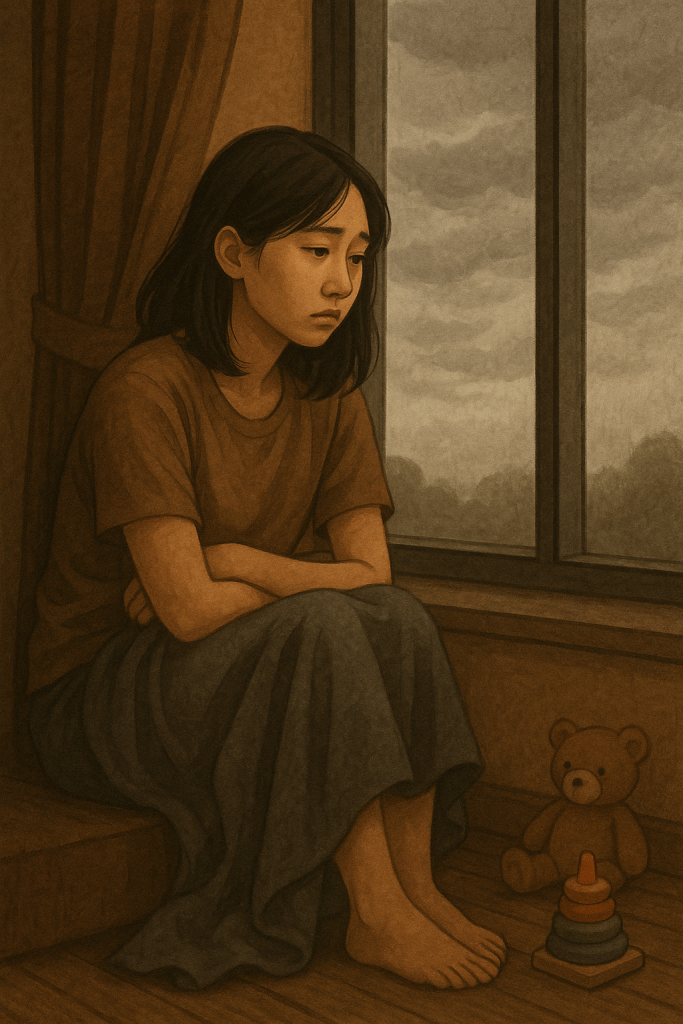
She was born in a modest but traditional family in southern China, raised under the expectations of “make your parents proud,” “don’t embarrass the family,” and “a good girl should be obedient.”
She was the quiet, high-achieving student, the daughter who never caused trouble.
She learned early on to hold back tears, suppress emotions, and do exactly what was expected of her.
She believed that being good was the only way to be loved.
After college, she went abroad to study in Switzerland.
For the first time, she was far from her parents and exposed to a completely different culture—one that encouraged individuality, emotional honesty, and mental health awareness.
But she couldn’t relax into it.
Among open, expressive peers, she remained cautious and reserved.
She was still the girl who replied, “I’m fine,” even when she was falling apart inside.
After finishing her studies, she returned to China briefly for work—once again becoming the “high-functioning woman” who seemed to have everything under control.
In the workplace, she was efficient, assertive, and decisive—traits often praised as “masculine strength.”
Her colleagues admired her, but deep down, she knew that behind the firmness was fear.
Behind every outburst of temper was years of suppressed anxiety and self-denial.
She told no one.
She was terrified someone might find out she wasn’t okay.
Then life changed again.
She met a Western man and married him. He was gentle, rational, and stable.
They had a child and moved to Europe together.
She thought she had found happiness—until she realized the real challenge was just beginning.
Cultural differences, language gaps, parenting disagreements, and social isolation quietly began to consume her.
After becoming a mother, the emotional cracks finally gave way.
She was diagnosed with postpartum depression.
But she couldn’t say it out loud.
In Chinese culture, depression isn’t something you talk about.
Words like “you’re overthinking,” “you’re just tired,” or “you should be grateful” echo louder than concern or comfort.
She couldn’t talk to her parents about it, nor her friends.
Even in Europe, she wasn’t sure anyone would truly understand.
She once tried to tell her husband she might be depressed.
He responded with silence, hesitation.
She longed for understanding, for a warm embrace.
Instead, she received advice—rational, practical, distant.
He was a good man. But not the one who could hold space for her pain.
She felt increasingly lost about the future.
She began to miss her homeland—the language, the food, the familiar rhythm.
She thought about returning to China, just to catch her breath.
But then fear crept in again:
Would her child adapt?
Would he hate the noise, the air, the rigid education?
Would she be able to give him what he needs?
She was caught between two worlds.
In Europe, she felt invisible.
In China, she feared being inadequate.
It began to feel like there was nowhere she truly belonged.
And the loneliness was not just cultural—it was within her marriage, too.
She managed everything—childcare, meals, logistics.
But he couldn’t understand the crushing weight she carried every day.
When she tried to explain, he said she was overreacting.
When she cried, he said she was too emotional.
When she broke down, he stood still.
She started to wonder if this marriage—once her safe harbor—had become another battlefield.
She wasn’t searching for a perfect life anymore.
She just wanted a small space where she could feel seen, where her pain could be real.
She started therapy. She began to write.
Not to fix herself—but to finally acknowledge the little girl inside who had held it all in for far too long.
She didn’t know what would happen to her marriage.
She didn’t know if her emotions would spiral again.
She didn’t know if she’d ever feel at home anywhere.
But she knew this:
She could no longer rely on someone who couldn’t hold her when she fell apart.
She once believed she had to be good enough to be loved.
Now, she’s slowly learning to tell herself:
Even if I’m misunderstood, even if I’m alone—I still deserve to be treated with kindness.
If you’re going through something similar,
please know this:
You’re not dramatic. You’re not broken.
You’re not alone.
And your silence deserves to be heard.
在中国长大,在欧洲生活,她始终找不到情绪的出口
她从小优秀、懂事,却从未真正被看见;她在欧洲学会表达情绪,却始终不被理解;她在婚姻与母职中逐渐崩溃,却连“我抑郁了”都不敢说出口。
一个中国女孩的真实自述,一段在文化夹缝中挣扎的旅程。
她出生在中国南方一个普通却充满期待的家庭,从小在“要争气”“不能丢人”“女孩要懂事”的训诫中长大。
她是老师口中“安静的好学生”,也是家人眼里“不需要操心的孩子”。她习惯了不哭,不闹,不表达,只一味地做“应该做的事”。
她以为,只有这样,才是被爱的方式。
大学毕业后,她远赴瑞士留学。
那是她第一次真正离开原生家庭,也第一次面对截然不同的文化——一个讲究个体表达、鼓励情绪真实、重视心理健康的世界。
可她依然不敢放松。
在一群自由、开放的同龄人之间,她依然保持着礼貌、克制、沉默。
她是那种看起来“独立又强大”的人,什么都自己扛。
学业结束后,她回国短暂工作,再次成为那个“什么都能搞定”的存在。
她在职场里像个男孩子一样雷厉风行、干净利落。她赢得了同事的尊重,也获得了不少赞赏。
可她自己知道,那些“果断”“强势”的背后,是长年累积的焦虑与压抑。
她会突然情绪爆炸,对一点小事大发雷霆,之后又陷入深深的自责和空虚。
她没有告诉任何人——她害怕被别人发现自己其实撑不住了。
命运带来了新的转折。
她遇到了一个欧洲男人,并嫁给了他。他温和、理性、稳定,在她最初的日子里给予了她安全感。
他们有了孩子,搬到欧洲生活。
她以为,幸福的生活就要开始了。
可现实远比她想象的更复杂。
文化差异、语言障碍、育儿观念的冲突,加上失去社交支持的孤立感,让她感到前所未有的孤独。
成为母亲之后,情绪的裂缝终于崩塌。
她患上了产后抑郁,但她不敢说出口。
在中国,抑郁是不该被说出来的东西。
“矫情”“不知足”“想太多”,这些评价比病本身更让人难以承受。
她无法向父母开口,甚至不敢告诉身边的朋友。
而在欧洲,她也不确定自己是否会被真正理解。
她曾试着告诉丈夫自己可能得了抑郁症,换来的却是沉默和回避。
她渴望被理解、被安慰,哪怕只是一个温暖的拥抱。
可丈夫的回应往往是冷静分析、理性建议,却从不真正“走进”她的情绪。
她越来越觉得——他是一个好人,却不是她此刻需要的那个人。
她对未来感到迷茫。
她开始思念祖国的味道、语言、亲人。
她想过回国,给自己重新一段喘息的机会。
可转念一想,她又害怕:孩子能适应吗?中国的教育节奏、空气质量、文化氛围,他会讨厌吗?
如果回去,他会失去朋友、语言环境,失去“根”。
她进退两难。
在欧洲,她孤独;在中国,她内疚。
她开始觉得,世界上好像没有一个真正属于自己的地方。
而这份孤独,连丈夫也不懂。
她努力让家维持运转,努力做好每一顿饭、每一次陪伴、每一个决策。
可丈夫从不理解她那种**“快被撑爆”的感觉**。
她一次次尝试沟通,换来的却是“你太敏感了”“你是不是想太多了”。
他认为她太情绪化,她认为他根本不关心她的痛苦。
她开始怀疑这段婚姻——
曾经以为可以相互守护的两个人,如今仿佛活在两个完全不同的世界。
她在寻找,不是完美的生活,而是一个可以诚实面对痛苦、慢慢修补自己的角落。
她开始接受治疗,也尝试写作来表达自己。
不是为了“治好”,而是为了让内心那个长期隐忍却始终无法被理解的小女孩,终于能被自己温柔地看见。
她不知道婚姻未来会如何,不知道自己的情绪会不会再崩溃一次,不知道还有没有真正的归属感。
但她知道,她不能再依赖一个无法接住自己的人来完成疗愈。
她曾以为,要足够好,才值得被爱。
但现在,她正慢慢学会告诉自己:
即使被误解、即使独自一人,也依然值得温柔以待。
如果你正在经历相似的挣扎,希望你也知道:
你不是一个人,你的痛苦不小题大做,你的沉默也值得被听见。
我们终会找到出口,哪怕是一点一点地挖出来的。
 Mademoiselle
Leave a comment