How to Spot PUA and NPD — And Why “Cultural Differences” Shouldn’t Be an Excuse for Emotional Harm
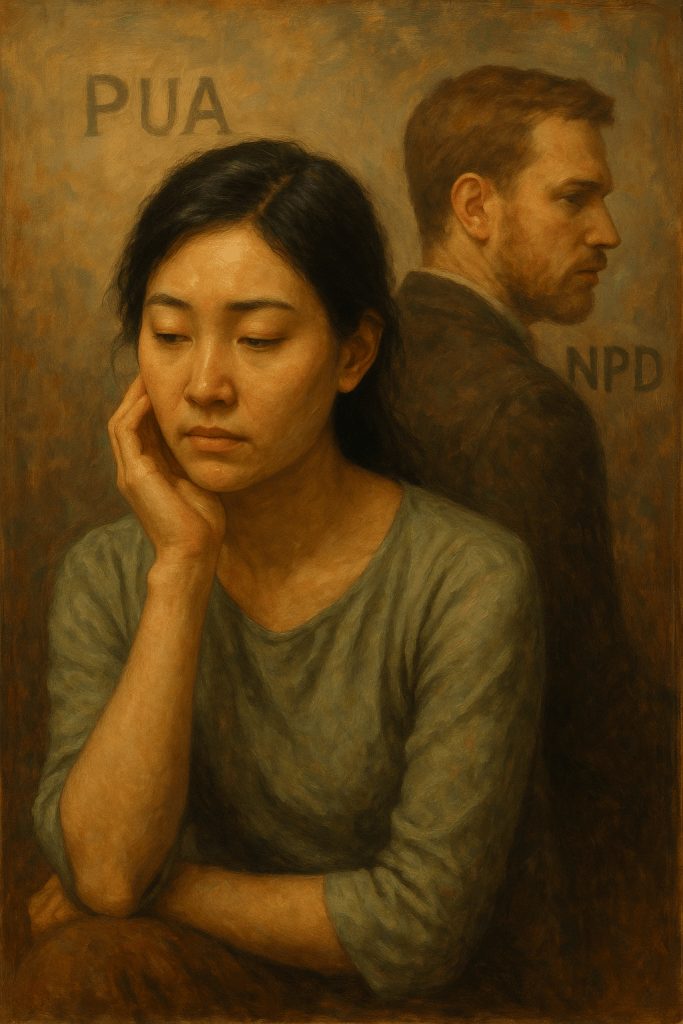
In today’s world of increasing cross-cultural relationships, the idea of blending cultures often comes wrapped in romance. But reality is far more complex than a fairy tale. Beneath the surface of “personality clashes” and “cultural misunderstandings,” there may lie more dangerous psychological patterns — like PUA (Pick-Up Artists) and NPD (Narcissistic Personality Disorder).
As someone in an international marriage, I’d like to share some personal insights and reflections to help others, especially women, stay aware and distinguish the real problem — instead of constantly blaming everything on “language barriers” or “East-West differences.”
What are PUA and NPD?
PUA (Pick-Up Artist): Originally referring to men who use tactics to attract women, but in reality, it often involves emotional manipulation — fast-paced intimacy, psychological control, and manufactured insecurity — aimed at making you lose yourself and become dependent. NPD (Narcissistic Personality Disorder): People with NPD can be extremely charming, yet deeply lack empathy. They habitually belittle others to preserve their own superiority, rarely take responsibility for their actions, and often use emotional manipulation (gaslighting) to make you doubt yourself.
Why Are International Relationships More Vulnerable to These Traps?
Language and cultural gaps create information asymmetry When you’re new to a cross-cultural marriage, limited fluency and lack of social support can put you at a communicative disadvantage. A PUA/NPD partner might use your uncertainty to maintain control. Romantic illusions can cloud judgment Foreign partners often seem exotic and attentive — their sweet words and cultural gestures can distract you from noticing their behavioral patterns. “Cultural difference” becomes a shield for controlling behavior Phrases like “Men from my country are just like this” or “You’re too sensitive — Chinese girls are so clingy” often mask genuine disrespect or manipulation.
How to Identify Emotional Manipulators
They constantly swing between “I love you” and emotional withdrawal You start wondering, Am I being too sensitive or emotional? They avoid equal communication, leaving you feeling like you have to try harder to understand them They keep asking you to change — but never self-reflect. They strike hardest when you’re emotionally vulnerable, instead of offering comfort
How to Avoid Cultural Misinterpretation and Stay True to Yourself
Differentiate cultural conflict from personality dysfunction Cultural issues can be discussed. Emotional manipulation, on the other hand, makes you feel erased, unheard, and constantly compromising. Keep your own support network and cultural identity Don’t lose touch with your native language, friends, or emotional safe spaces just because you married abroad. Set clear boundaries and don’t be afraid to say no Boundaries are not relationship killers — they are the foundation of healthy love. Learn about psychology and strengthen self-awareness Emotional manipulators thrive on your self-doubt. The moment you see through them, they start losing power.
Final Words
Not every cross-cultural romance is a tragedy, but not every smile hides sincerity either. May we all learn to hold both clarity and compassion — not rejecting love out of fear, but never losing ourselves in the name of love.
Interested in more on this topic? Upcoming in this series:
How to Tell “Cultural Control” from True Acceptance?
Top 5 Common Misconceptions in East-West Relationships
Building a Sense of Safety as an International Student or Foreign Wife
⸻
【国际婚姻中的隐形陷阱】如何识别PUA和NPD,避免“文化差异”成为伤害的遮羞布
在越来越多跨国婚姻出现的今天,文化融合的浪漫故事常常吸引人们的目光。然而,现实远比童话复杂。在“性格差异”、“文化差异”的表象下,隐藏着一些真正危险的心理操控模式,比如 PUA(情感操控者) 和 NPD(自恋型人格障碍)。
作为一个身处异国婚姻中的女性,我想分享一些亲身感受与观察,帮助更多姐妹提高警觉,认清“真正的问题”,而不是总把一切误解为“语言不通”或“东西方习惯不同”。
⸻
什么是PUA和NPD?
• PUA(Pick-Up Artist):最初是“泡学达人”,但现实中往往是情感猎手,通过“快节奏的亲密关系”、“心理操控”、“制造不安全感”等手段,让你一步步失去自我、产生依赖。
• NPD(Narcissistic Personality Disorder):自恋型人格障碍患者通常非常有魅力,但极度缺乏同理心,习惯性贬低他人来维持自己的优越感。他们很少为错误负责,经常用情绪操控(gaslighting)让伴侣产生自我怀疑。
⸻
在国际婚姻中,为什么更容易掉入陷阱?
1. 语言和文化差异造成信息不对等
在刚进入跨国婚姻时,语言不流利、缺乏社会支持,会让你在沟通中处于弱势地位,PUA/NPD一方会利用你的“不确定感”来控制你。
2. 容易被“浪漫”迷惑
异国恋充满新鲜感,对方的甜言蜜语、文化上的殷勤,常常让人忽略了真正的“行为模式”。
3. 文化差异成为“合理化控制”的挡箭牌
“我们国家的男人都这样”、“你太敏感了,中国女生是不是太黏了?”——这些说法常被用来掩盖真正的不尊重与控制。
⸻
如何识别情感操控者?
• 他们总在“爱你”和“冷落你”之间反复横跳
• 你开始质疑自己是不是太敏感、太情绪化
• 他们不愿与你平等沟通,反而让你感到“我必须更努力去理解他”
• 他们总是对你提出“改变”的要求,却从不反省自己
• 他们擅长在你情绪脆弱时“补一刀”,而不是给予安慰
⸻
如何避免文化误伤,守住自我?
1. 区分“文化差异”与“人格问题”
文化差异是可以沟通和协商的,而情感操控则会让你感到“被剥夺”,你感觉不到被尊重,而只有不断让步。
2. 保有自己的社交圈和表达通道
不要因为进入婚姻就断了和原生文化的连接。你需要能说母语的朋友,需要可以安全倾诉的空间。
3. 设立清晰界限,敢于说“不”
拥有自己的边界不是“破坏关系”,而是健康关系的前提。
4. 多了解心理学知识,提升自我觉察能力
情感操控者最怕的是你“看清了他们”,因为他们依赖你的“自我怀疑”来操控你。
⸻
最后一句话:
不是每段跨国恋都是灾难,但也绝不是每一个微笑背后都是真诚。愿我们都能拥有清醒的头脑和温柔的心,既不因恐惧而拒绝爱,也不因浪漫而失去自己。
⸻
如果你对这类话题感兴趣,下周将继续写出:
• 如何辨别“文化控制”与“真实包容”?
• 中西恋爱关系中常见的五大误区
• 留学女生、异国妻子最需要建立的“安全感”支持系统
 Mademoiselle
Leave a comment