成长的起点不同:中德小学入学的文化差异对比
— Observations from a Cross-Cultural Motherhood Journey
—— 一位跨文化母亲的育儿观察
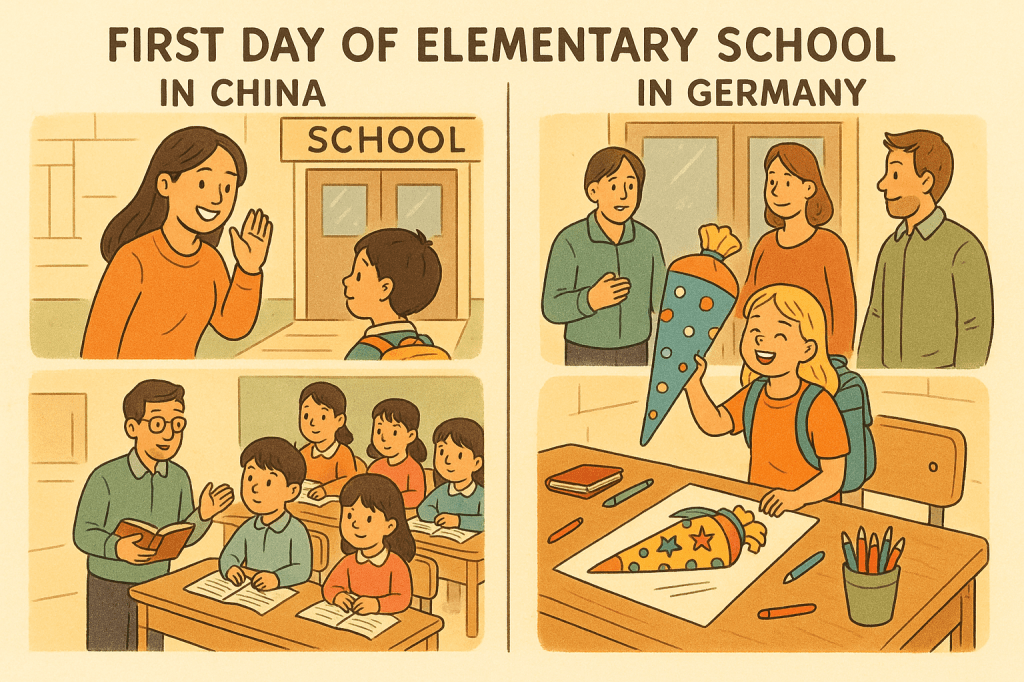
I still vividly remember my first day of elementary school in China. That morning, my parents walked me to the school gate, said a few encouraging words, and left. As the school gate closed behind me, my first official chapter of education began.
我对自己在中国小学的第一天记忆犹新。那天早晨,父母送我到校门口, 嘱咐了几句,就离开了。校门在我身后合上,我的人生第一次“正式学习”就这样开始了。
The school held a brief welcome assembly, and then we went straight to our classrooms, where teachers began taking attendance and teaching. In China, even from day one, classes are taught by different subject teachers—Chinese, math, music, art, and more. The shift from the free-spirited world of kindergarten felt like a sudden plunge into the deep end of growing up.
学校开了个简短的欢迎大会,之后我们进入教室,老师开始点名、讲课。中国的小学从第一天起就是“分科教学”,每门课由不同老师授课。刚从幼儿园那种自由状态中跳出来,这种变化就像是被推入成长的深水区。
Years later, when my son started elementary school in Germany, I was struck by how different the experience was.
多年后,当我儿子在德国上小学的第一天,我深深感受到两种体验的不同。
Not only were the children invited to school, but so were the parents. The kids sat in the front rows of the classroom, while we parents quietly observed from the back as teachers introduced themselves and explained the school routines. The headmaster would also give a warm speech—often in a church or assembly hall—welcoming each new student.
不只是孩子,父母也被正式邀请一起参加开学典礼。孩子坐在教室前排,家长坐在后排,老师们逐一介绍自己,解释课程内容,校长也会在教堂或礼堂温柔致辞欢迎每一位新生。
One part of the ceremony that truly touched me was a short performance by last year’s first graders, now moving into second grade. They sang songs or recited poems, warmly welcoming the newcomers. This little show not only brought smiles to the younger children but also gave them a sense of what they might become next year—a gentle and inspiring glimpse into their own near future.
开学典礼上让我特别感动的一个环节,是去年的一年级学生、如今升入二年级的孩子们所带来的小表演。他们唱歌、朗诵,用孩子的方式欢迎新生。这种轻松又温馨的形式,让刚入学的孩子看到了一年后的自己,种下了对校园生活的期待与好奇。
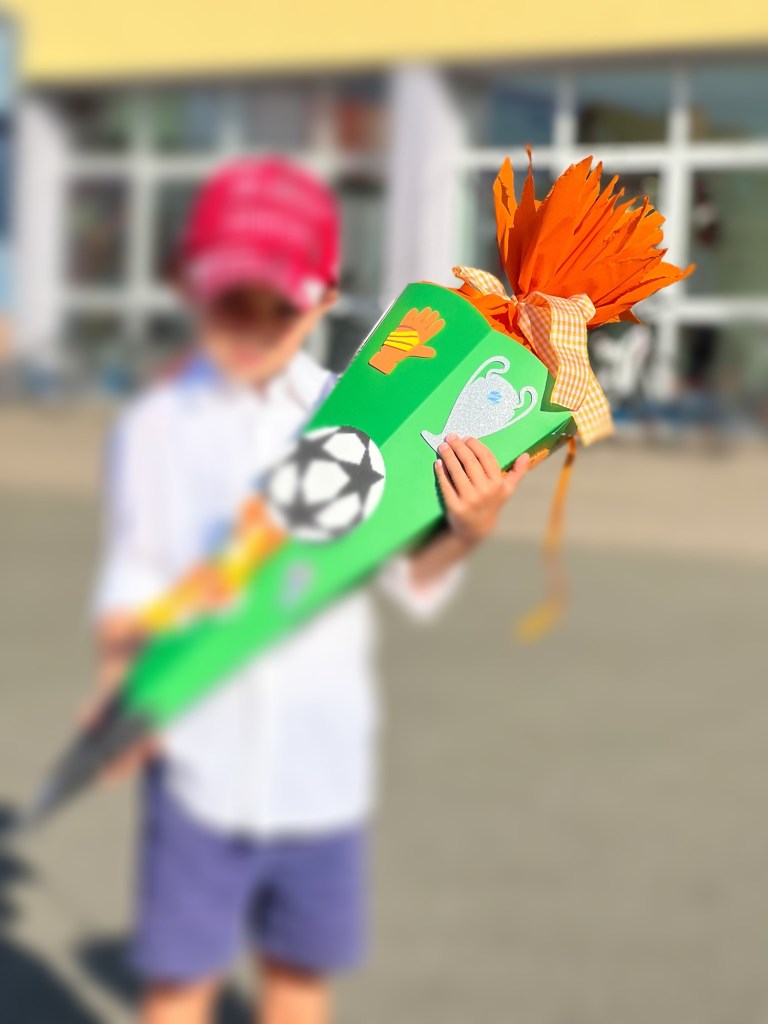
Many children proudly carried their Schultüte—a large, colorful cone filled with sweets, school supplies, and tiny gifts—specially prepared by families to mark this milestone with joy.
很多孩子手里都拿着一个五颜六色的大圆锥形礼包(Schultüte),里面装着糖果、小文具、祝福卡片,是家人为孩子特别准备的“成长鼓励包”。
📚 Books & Supplies: Parent-Prepared vs School-Provided
📚 书本与文具:家长采购 vs 学校统一
In Germany, school prep begins well before day one. Families receive a detailed checklist listing every item—from notebooks and pencil cases to specific folder colors. Parents are responsible for buying everything, labeling each item, and packing the schoolbag.
德国小学的开学准备从暑假前就开始。学校会发放一份详细的“入学清单”,列出每一项文具、练习本、文件夹甚至颜色要求。所有物品都需家长自行采购、贴名字并装入书包。
In China, textbooks and workbooks are ordered and distributed by the school. Parents simply pay the book fees during registration, and children receive their books in class. Parents only need to prepare basic stationery.
而在中国,课本和练习册通常由学校统一采购并发放,家长在报名时缴纳书本费。孩子开学时直接在教室领取到自己的书本。文具由家长准备,但相对简单。
This difference reflects cultural values—China emphasizes efficiency and uniformity, while Germany leans toward parental involvement and individual responsibility.
这也反映了文化理念的不同:中国讲求“统一与高效”,而德国则强调“家庭参与与责任感”。
🎒 First-Day Homework: Emotional Transition vs Academic Kickoff
🎒 第一天的作业:情绪引导 vs 正式学习
My son’s first homework in Germany was simple but meaningful: draw your Schultüte and write what’s inside.
儿子在德国小学的第一项作业是:画出自己的Schultüte,并写下里面装了什么。
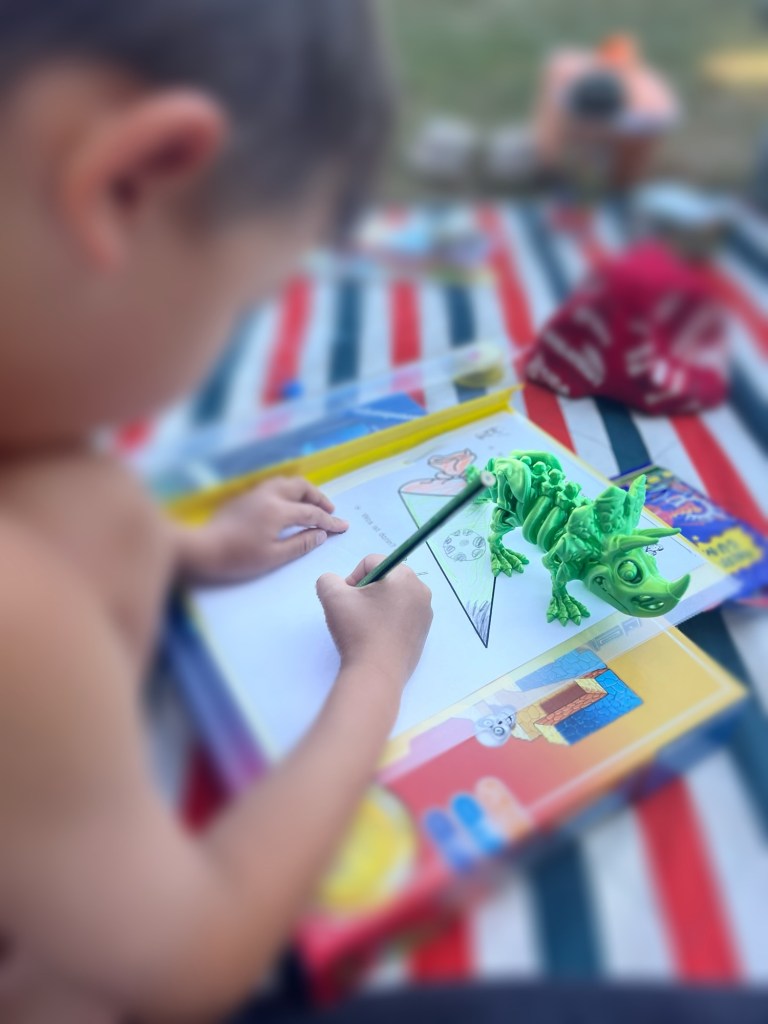
The assignment helped children express themselves and feel more at home. That afternoon, we sat on the Mat at swimming pool ground as he proudly drew Dino, candies, pencils, and said, “And the round chocolate you hid inside!”
老师希望孩子通过画画和分享,表达情绪、建立归属感。那天下午我们全家坐在泳池边的草坪上,他一边画着糖,玩具恐龙,彩色绘画铅笔,一边开心地说:“还有你早上藏在里面的圆形巧克力!”
In contrast, in China, first-day homework often includes pinyin writing, character tracing, or basic math exercises—a clear signal that formal learning has begun.
在中国,小学生第一天的作业通常是抄写拼音、练习字或做简单的算术题,标志着学习正式开始了。
💬 Emotional Preparation: A Gentle Landing
💬 情绪准备:温柔衔接的用心
What touched me most was how seriously German parents took the emotional transition from kindergarten to primary school. They started preparing weeks in advance:
让我印象最深的是,德国父母格外重视孩子从幼儿园到小学的过渡。他们会提前数周做准备:
Adjusting routines like sleeping and waking up earlier 提前调整作息,比如早睡早起 Talking about what school will be like, reading books, sharing their own school memories 和孩子聊小学的样子,读相关绘本,讲自己上学的故事 Creating “walking groups” so kids had familiar faces beside them 组织邻里家庭“结伴上学”,让孩子结识同行的朋友
In China, starting primary school is often seen as the natural next step. While parents do prepare materials and paperwork, emotional support is sometimes overlooked.
而在中国,小学入学被认为是理所当然的下一步。许多家长重视实务上的准备(报名、书费、文具),但情绪方面往往容易忽视。
🧭 Modern Shifts and Cultural Blending
🧭 新趋势与文化融合
Fortunately, changes are underway in China. Many urban schools now host welcome ceremonies or parent orientations. Some families are even adopting their own versions of the Schultüte.
值得欣慰的是,中国也在不断变化。许多城市学校开始举行入学仪式、家长会, 一些家庭也会模仿德国的开学礼包传统,准备一个“入学礼物”鼓励孩子。
At the same time, in Germany, there’s growing awareness that too soft a start may lead to academic gaps. Some schools are responding with more structured early learning.
而德国方面,也有越来越多的声音呼吁:过于轻松的入学也可能让孩子在学术准备上滞后。于是部分学校也开始更系统地安排基础课程。
🌱 Final Thoughts: Finding Balance Between Two Worlds
🌱 写在最后:我们可以从中间找到平衡
This cultural contrast isn’t about which is better—it’s about understanding two different philosophies of growth:
这场文化对比,不是为了评判哪种更好,而是让我们看到:
China emphasizes “quick adaptation to structure” 中国强调“快速适应规范” Germany values “emotional safety and gradual transition” 德国看重“情绪安全与慢节奏过渡”
As a mother raising a child between two cultures, I’m learning to:
作为一个跨文化家庭的母亲,我也在学习:
Begin with gentleness, grow with clarity.
在温柔中启程,在明确中成长。
Because the best kind of education always begins with—
因为最好的教育,永远始于——
Seeing the child, and walking alongside at their pace.
看见孩子,走在他们的节奏上。
 Mademoiselle
Leave a comment